

Benefits of smart thermostats for energy savings sets the stage for this enthralling narrative, offering readers a glimpse into a story that is rich in detail and brimming with originality from the outset. Smart thermostats are revolutionizing the way we manage energy consumption in our homes and buildings, providing innovative solutions to reduce costs and environmental impact.
As we delve deeper into the realm of smart thermostats, we uncover a world of possibilities that optimize energy usage, enhance convenience, and pave the way for a more sustainable future.
Benefits of Smart Thermostats for Energy Savings
Smart thermostats are a great tool for reducing energy consumption in homes and businesses. By utilizing advanced technology, these devices offer a range of features that contribute to energy efficiency and help lower utility bills.
Optimized Heating and Cooling
Smart thermostats are equipped with sensors that can detect when occupants are present or when a space is empty. This allows the thermostat to adjust the temperature settings accordingly, optimizing heating and cooling schedules to save energy. For example, the thermostat can automatically lower the temperature when no one is home and raise it before occupants return, ensuring comfort while minimizing energy waste.
Remote Access and Control
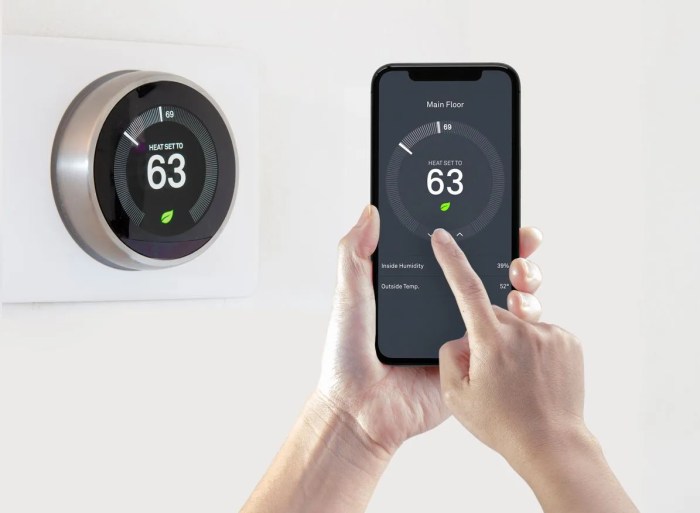
One of the key features of smart thermostats is the ability to control temperature settings remotely through a smartphone app or web interface. This allows users to make adjustments from anywhere, ensuring that heating or cooling systems are not running unnecessarily when no one is home.
By being able to monitor and adjust settings remotely, users can prevent energy waste and save on utility costs.
Learning Capabilities
Some smart thermostats have learning capabilities that adapt to users' schedules and preferences over time. By analyzing patterns of temperature adjustments and occupancy, these thermostats can create personalized heating and cooling schedules that maximize energy savings without sacrificing comfort. This intelligent feature helps users save energy without having to constantly adjust the thermostat manually.
Energy Usage Reports
Many smart thermostats provide energy usage reports that show users how much energy they are consuming and where there may be opportunities for further savings. By having visibility into their energy usage patterns, users can make informed decisions on how to optimize their heating and cooling settings for maximum efficiency.
This insight can lead to significant reductions in energy consumption and lower utility bills over time.
Remote Access and Control
Remote access to smart thermostats revolutionizes the way we manage our heating and cooling systems, offering convenience and energy-saving opportunities like never before.
Energy-Saving Adjustments Anywhere
With remote access, you can adjust the temperature of your home or office from anywhere in the world using a smartphone or computer. For instance, if you forgot to turn down the heat before leaving for a weekend trip, you can easily lower the temperature remotely to save energy while you're away.
Convenience and Flexibility
Imagine being able to adjust the thermostat settings from the comfort of your bed or while at work. Remote control of thermostats provides unmatched convenience and flexibility, allowing you to fine-tune the temperature based on your schedule and preferences. This flexibility enables you to optimize energy usage and reduce waste by adjusting settings according to occupancy patterns and weather changes.
Contribution to Energy Efficiency
By having the ability to control your thermostat remotely, you can ensure that your heating and cooling systems are only running when needed. This proactive approach to managing energy usage leads to overall energy efficiency in a household or building, resulting in lower utility bills and a reduced environmental impact.
Remote access empowers users to make informed decisions that prioritize energy conservation without compromising comfort.
Learning and Adaptive Features
Smart thermostats offer learning and adaptive features that set them apart from traditional thermostats. By understanding user preferences and adjusting settings accordingly, these devices contribute significantly to energy savings.
Learning User Preferences
Smart thermostats utilize sensors and algorithms to learn user habits and preferences over time. For example, they can track when occupants are typically home or away, preferred temperature settings at different times of the day, and even adjust for seasonal changes.
Adaptive Energy Optimization
Based on the patterns and data collected, smart thermostats can optimize energy usage by adjusting heating and cooling cycles to ensure comfort while minimizing energy wastage. This adaptive nature leads to more efficient energy consumption.
Examples of Energy Savings
- Smart thermostats can automatically lower the temperature when the house is empty, reducing energy consumption during idle periods.
- By learning the time it takes to heat or cool a space, smart thermostats can start the HVAC system just in time to reach the desired temperature, avoiding unnecessary energy use.
- Some models can provide insights into energy usage patterns, allowing users to make informed decisions on how to further optimize their HVAC systems for efficiency.
Role of Machine Learning Algorithms
The machine learning algorithms embedded in smart thermostats play a crucial role in enhancing energy efficiency. These algorithms continuously analyze data on user behavior, weather conditions, and home characteristics to make real-time adjustments that maximize energy savings without compromising comfort.
Integration with Smart Home Systems
Smart thermostats offer a seamless integration with other smart home devices, allowing for enhanced energy management and efficiency. By connecting with lighting, HVAC systems, and other smart devices, smart thermostats create a fully interconnected ecosystem that works together to maximize energy savings.
Benefits of Integration
- Energy Efficiency: When smart thermostats are integrated with other smart devices, they can work in sync to optimize energy usage throughout the home. For example, the thermostat can communicate with the lighting system to adjust brightness levels based on occupancy, or coordinate with the HVAC system to maintain comfortable temperatures efficiently.
- Convenience: Integrated smart home systems offer the convenience of controlling multiple devices from a single interface. This means users can easily adjust temperature settings, lighting levels, and more, all from their smartphone or tablet.
- Cost Savings: By working together, interconnected smart home devices can help reduce energy waste and lower utility bills. For instance, a smart thermostat that communicates with a smart lighting system can ensure that lights are only on when needed, reducing electricity costs.
Examples of Interconnected Systems
- Smart Thermostat and HVAC System: A smart thermostat can detect when no one is home and adjust the temperature accordingly, while also communicating with the HVAC system to avoid unnecessary heating or cooling.
- Smart Thermostat and Lighting System: By integrating with a smart lighting system, a smart thermostat can adjust lighting levels based on occupancy, time of day, and natural light, contributing to overall energy savings.
Impact on Energy Efficiency
By creating a fully integrated smart home ecosystem, the overall impact on energy efficiency is significant. With devices working together seamlessly, energy usage is optimized, resulting in lower utility bills, reduced environmental impact, and a more comfortable living environment.
Closing Summary
In conclusion, the benefits of smart thermostats for energy savings are undeniable. From remote access and control to learning features and integration with smart home systems, these devices offer a holistic approach to energy efficiency that can transform the way we interact with our environment.
Embracing smart thermostats is not just a choice for convenience but a step towards a greener, more efficient future.
FAQ Compilation
Can smart thermostats really help in reducing energy consumption?
Yes, smart thermostats optimize heating and cooling schedules to save energy, leading to noticeable reductions in energy usage.
How do smart thermostats learn user preferences?
Smart thermostats utilize learning features to adapt settings based on user behavior and patterns, contributing to energy savings.
What is the impact of integrating smart thermostats with other smart home devices?
Integrating smart thermostats with other devices enhances energy management, maximizing overall energy efficiency in a household or building.

